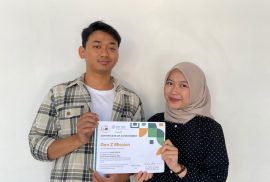
Students of the Department of Food and Agricultural Product Technology, Universitas Gadjah Mada (TPHP UGM), enrolled in the Sugar Technology course took part in an industrial visit to PT Madu Baru and Adana Coconut Sugar Factory on Saturday, May 30. The activity was designed to provide students with direct learning experience on sugar production processes, both at an industrial scale and within a community-based enterprise setting.
The first visit was conducted at PT Madu Baru. During the visit, students learned about the production process of white crystal sugar, beginning with sugarcane reception and processing, juice extraction, clarification, evaporation, crystallization, and final packaging. Students also had the opportunity to observe the production flow directly inside the factory and engage in discussions with experts and practitioners involved in sugar processing.
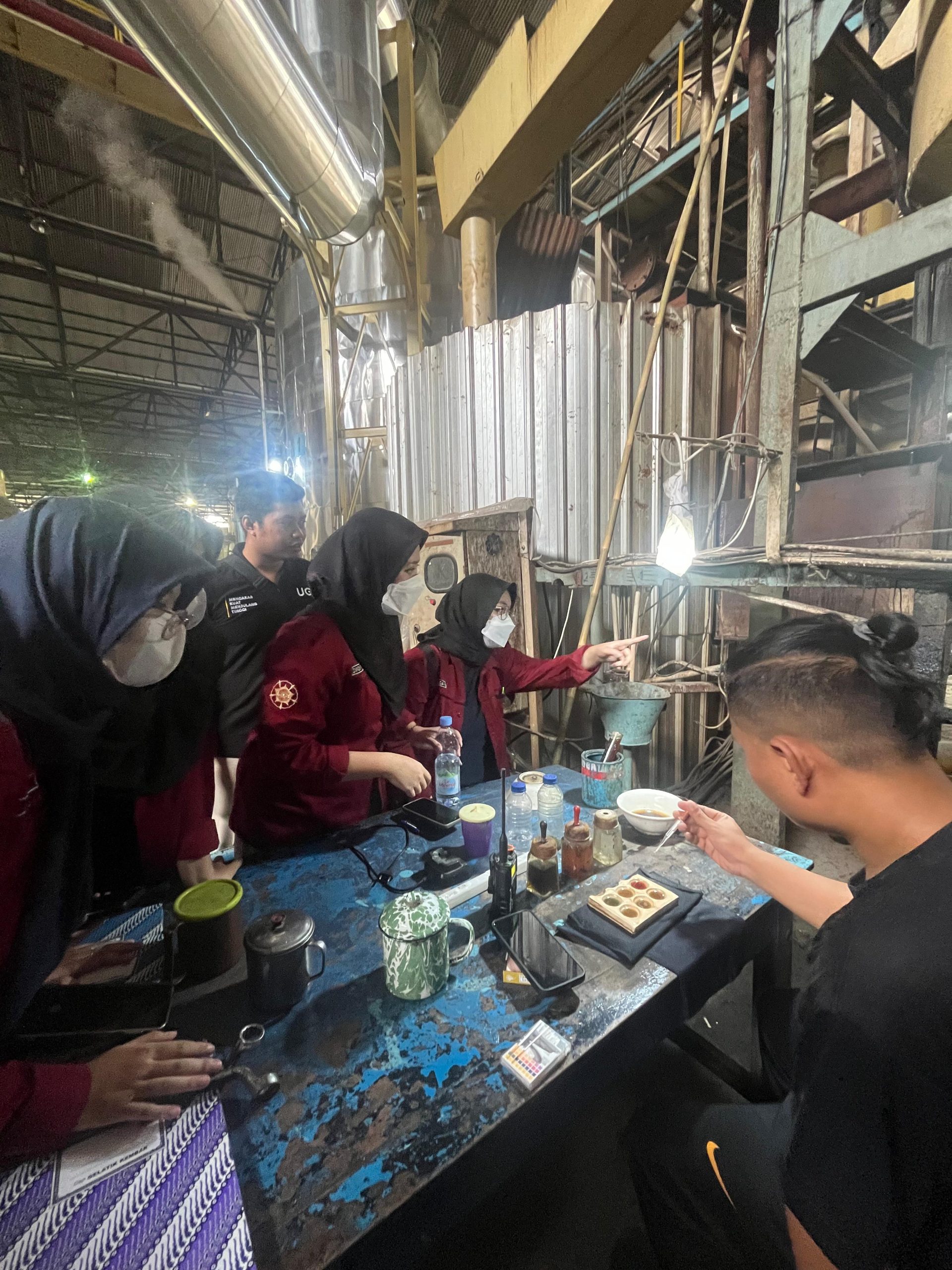
Through the discussion session, students actively raised questions related to processing stages, quality control, production efficiency, and current challenges facing the sugar industry. The activity served as an opportunity for students to connect theoretical knowledge gained in the classroom with real practices in the field.
Following the visit to PT Madu Baru, the program continued to Adana Coconut Sugar Factory. Unlike the large-scale production of white crystal sugar, this visit introduced students to the production of coconut sugar, locally known as gula semut, made from coconut sap. Students observed the processing stages from sap cooking and stirring to granule formation, refining, and sieving.
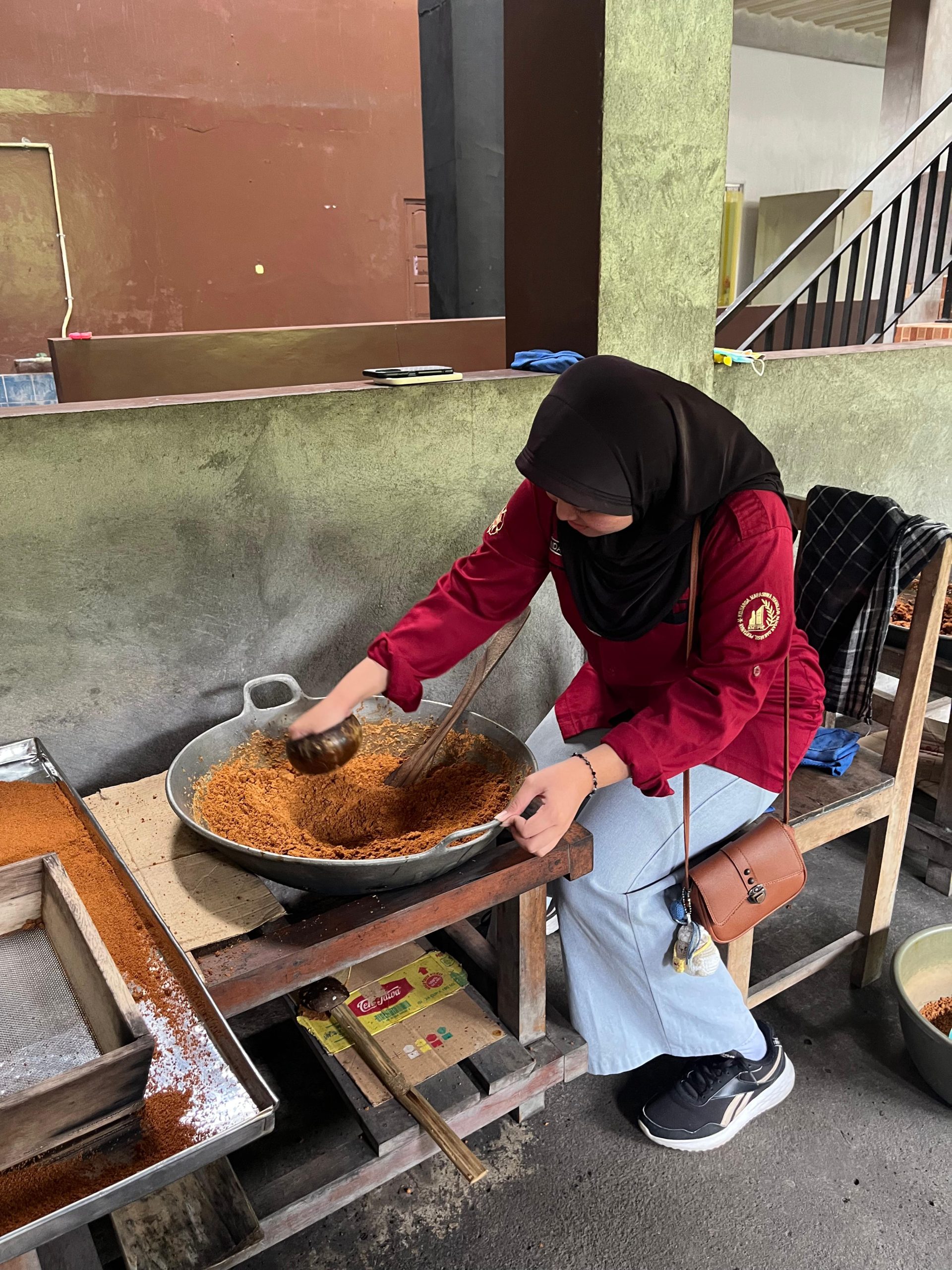 One of the highlights of the visit was that students were not only able to observe the process, but also take part directly in several stages of coconut sugar production, which are still carried out manually. This hands-on experience offered students a deeper understanding of the differences in raw materials, processing methods, production scale, and quality challenges between sugarcane-based sugar and coconut sap-based sugar.
The industrial visit formed part of an experiential learning approach that encourages students to understand sugar processing technology in a more comprehensive way. Through this activity, students are expected to gain broader insight into the interconnection between raw materials, production processes, product quality, and the potential development of the sugar industry in Indonesia.
The visit also contributed to the achievement of the Sustainable Development Goals (SDGs), particularly SDG 4 on Quality Education through direct learning beyond the classroom, SDG 9 on Industry, Innovation, and Infrastructure through exposure to sugar production processes, and SDG 12 on Responsible Consumption and Production through an understanding of value-added food processing.
Author: Firstnandita Keisha