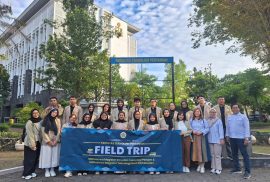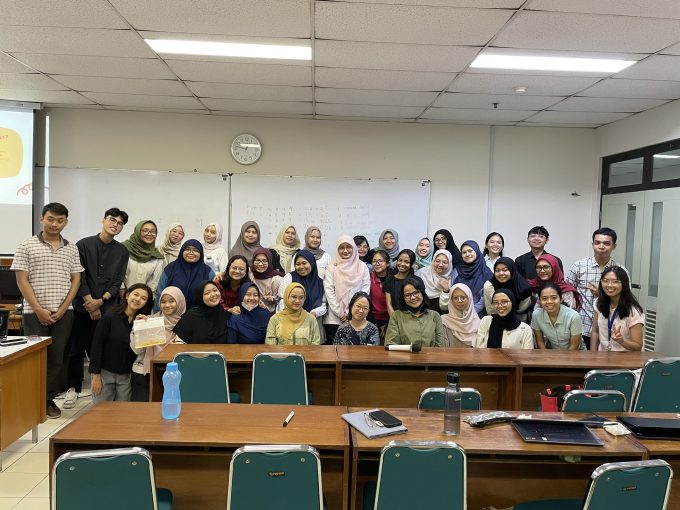
Graduate students from the Master’s Program in Estate Crop Product Technology and the Master’s Program in Food Science and Technology at the Department of Food and Agricultural Product Technology, Faculty of Agricultural Technology, Universitas Gadjah Mada, took part in a Food Flavor lecture on Monday (May 11). Led by Dr. Manikharda, S.T.P., M.Agr., the session provided students with hands-on experience in understanding flavor creation through food formulation practice.
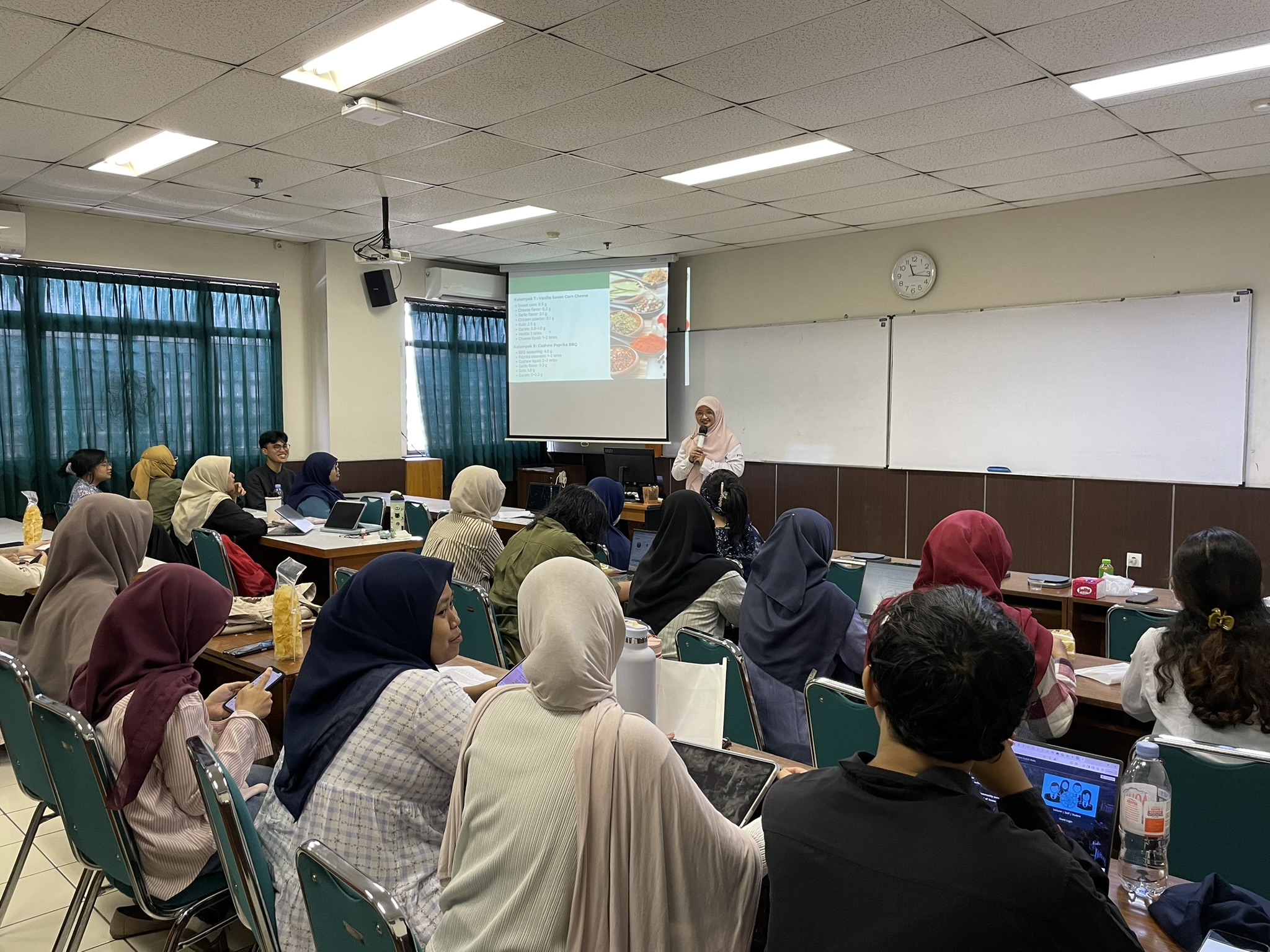
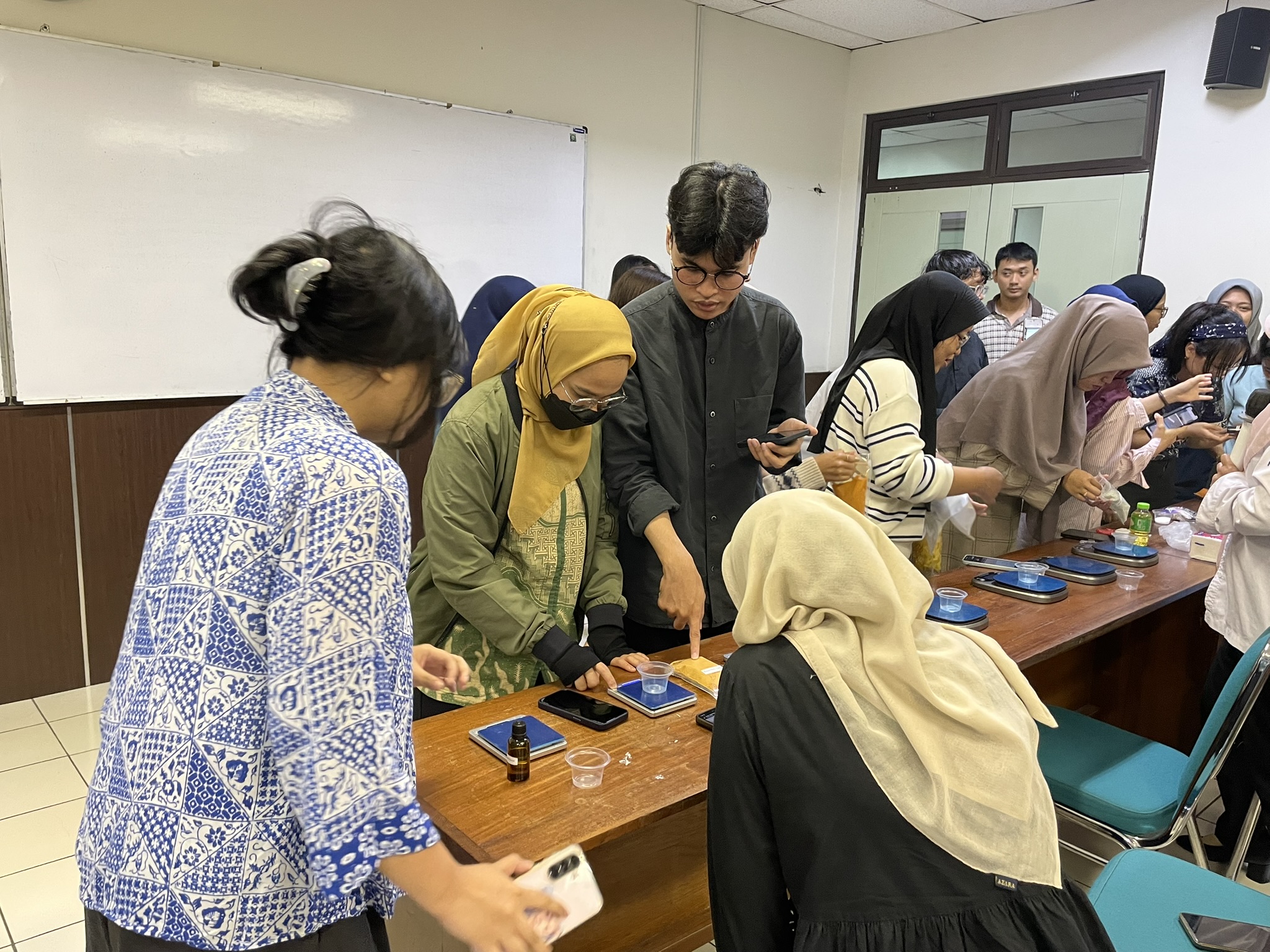
During the session, students were divided into eight groups to develop various flavor profiles, including vanilla corn cheese, cashew paprika BBQ, kimchi savory, and several other variants. Each group received a prepared formulation with specified ingredient measurements, allowing students to focus on weighing, mixing, and observing the sensory characteristics of the resulting flavors.
After the flavor blends were prepared, students applied them to cassava chips as the food medium. The products were then evaluated based on several parameters, including aroma, taste, aftertaste, mouthfeel, and overall impression. Each group also sent one representative to taste and assess the flavors developed by the other groups.
 Dr. Manikharda explained that flavor creation is a process that combines both art and science. A flavorist, she noted, must be creative in developing harmonious and appealing flavor profiles, while also possessing strong sensory evaluation skills.
“In creating a flavor, we cannot rely solely on what we personally like. A formulator needs to understand how other people perceive aroma and taste, as well as how a flavor performs when applied to a particular food product,” she said.
She further emphasized that the success of a flavor is determined not only by its formulation, but also by its compatibility with the food matrix. Through the practice session, students observed that some flavors paired well with cassava chips, while others were less suitable. One example was the salted caramel milk tea flavor, which conceptually may be more appropriate for products such as popcorn, but was less compatible when applied to cassava chips.
In the lecture session, Dr. Manikharda also introduced the concept of the flavor triangle, ranging from solvent solution, characterizing compounds, and contributory compounds to authenticity and signature flavor. This framework helped students understand how a flavor is built to develop a distinctive character and strong product identity.
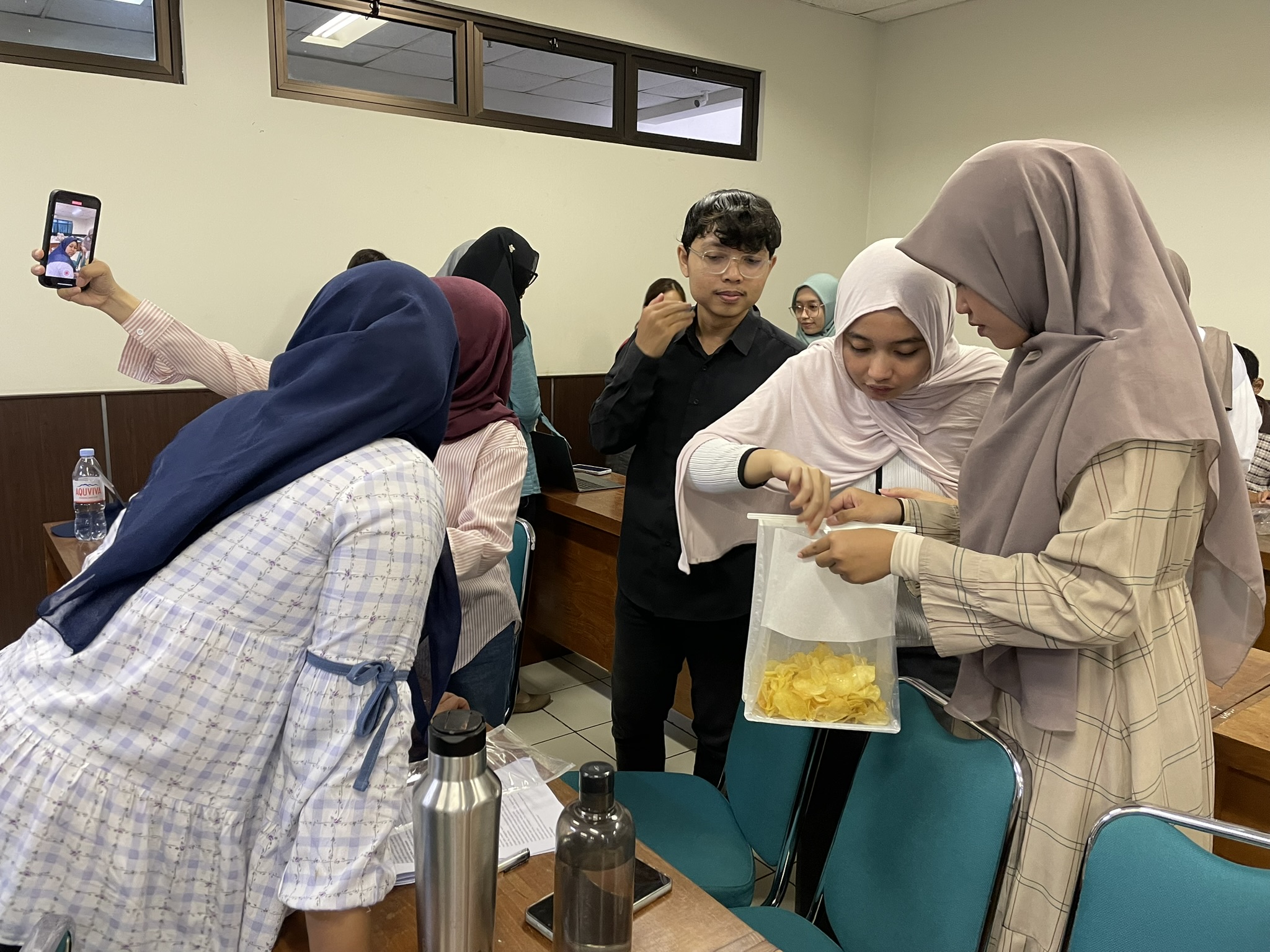 For the students, the activity offered an engaging learning experience and provided a clearer understanding of the role of formulators in the food industry. One student shared that the hands-on session was enjoyable and offered new insight into how flavors are developed not only to taste good, but also to deliver the right sensory character.
Through this practice-based learning activity, students are expected to gain a deeper appreciation of the precision, creativity, sensory skills, and consumer understanding required in food flavor development.
Author: Firstnandita K.