

Students of the Department of Food and Agricultural Product Technology, Universitas Gadjah Mada (TPHP UGM), took part in a hands-on sourdough-making class as part of the Bakery Technology course on Tuesday, May 26. The practical session introduced students to naturally fermented bread-making while encouraging them to observe how different tools, heat treatments, and baking durations influence the final quality of bakery products.
Throughout the session, students were not only tasked with producing sourdough bread as a final product, but also with examining how variations in the process could affect the characteristics of the bread. The key aspects observed included the use of different processing tools, variations in heat treatment during baking, and differences in baking time. Through this approach, students were encouraged to understand that the quality of bakery products is shaped not only by ingredient formulation, but also by precise process control during production.
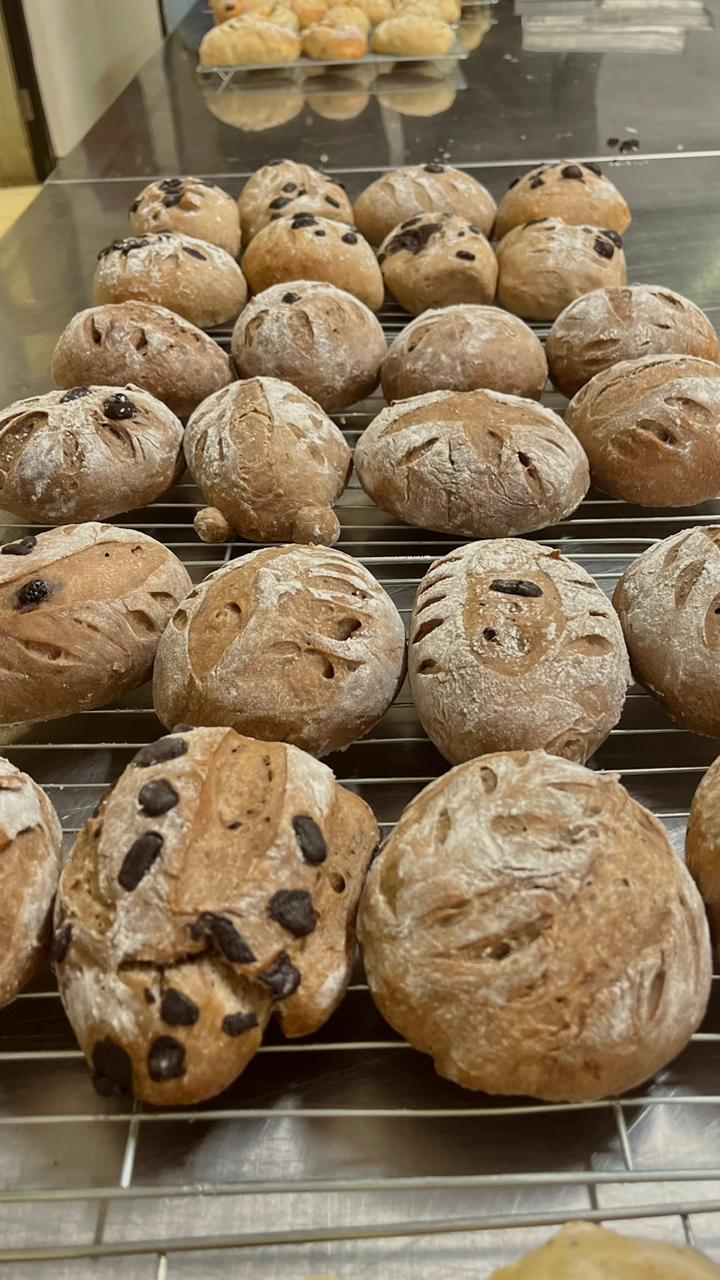 Sourdough is a bakery product made through natural fermentation. Unlike bread made with instant yeast, sourdough relies on the activity of microorganisms in a starter to develop its distinctive characteristics, including aroma, flavor, and texture. For this reason, fermentation is a crucial stage that requires careful observation and understanding.
During the practice, students worked in groups to prepare the dough, monitor fermentation development, shape the dough, and carry out the baking process. The use of different tools, baking temperatures, and baking durations became the main points of comparison, allowing students to evaluate the outcomes of each treatment. The resulting sourdough breads were then observed based on simple visual and sensory characteristics, such as crust color, crumb texture, aroma, loaf volume, and degree of doneness.
Hanifa, one of the participating students, shared that the practice was a memorable first experience. “The practice was really exciting, especially because it was my first time making sourdough. Usually, when making bread, we use instant yeast, but sourdough requires a longer process, even up to two days, because it involves preparing the starter, allowing fermentation to take place, and creating scores or patterns on the surface of the dough before baking,” she said.
The activity builds upon previous Bakery Technology learning experiences, in which students were introduced to bread-making using different processing methods, including steaming and baking, to compare the characteristics of the final products. Through this practical class, students are expected to gain a deeper understanding of bakery processing principles and connect theoretical knowledge of fermentation, process control, and food quality evaluation with real production activities.
The sourdough-making practice reflects TPHP UGM’s commitment to active and applied learning. Beyond strengthening students’ technical skills in bakery product processing, the activity also fostered observation skills, teamwork, and analytical thinking, which are essential foundations for future food product development.
Author: Firstnandita Keisha


