
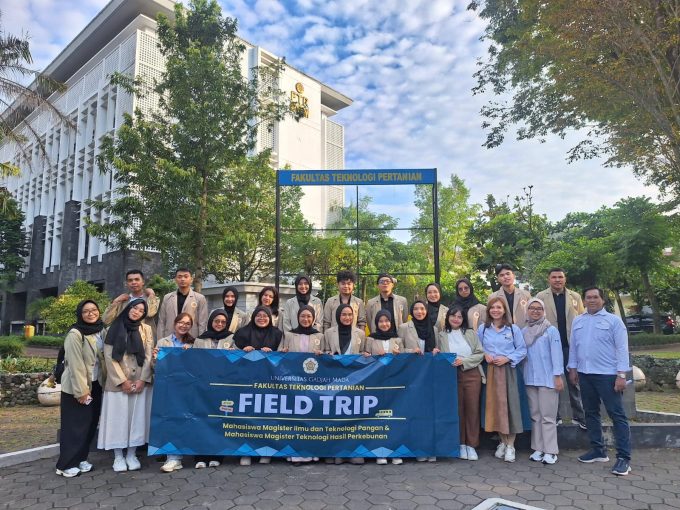
Yogyakarta — Graduate students from the Master’s Programs in Food Science and Technology (ITP) and Plantation Product Technology (THP) at Universitas Gadjah Mada (UGM) participated in an industrial visit to the Banaran Coffee Factory and Museum and Pawon Luwak Coffee in Magelang on Monday (April 27). The visit was designed as part of a case-based learning approach, aimed at strengthening students’ understanding of the coffee processing value chain—one of Indonesia’s most important plantation commodities.
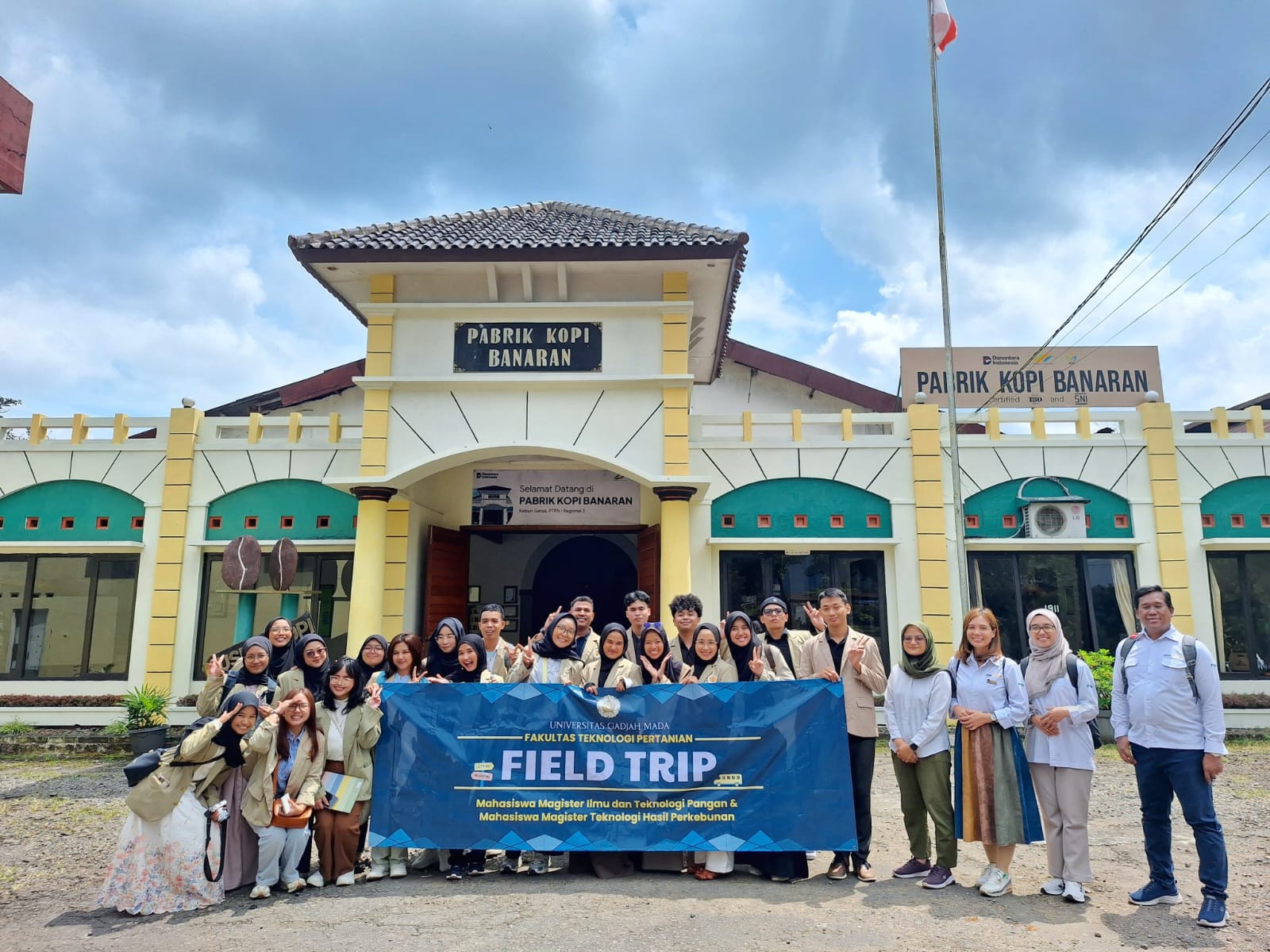
The program began at the Banaran Coffee Factory and Museum, where students were introduced to coffee from a comprehensive perspective, spanning its global history, diverse varieties, and wide range of beverage products. Participants also observed the coffee storage facilities and gained insight into both dry and wet processing methods. In addition, they were introduced to key production equipment, including the raung pulper, which is used to remove the outer layer of coffee cherries while facilitating the washing process.
As the visit took place during a non-production period, students were not directly involved in the processing activities. Nevertheless, they were able to gain a thorough understanding of the production flow, the functions of each piece of equipment, the types of coffee plants cultivated, and the roasting process—from light to dark roast—which significantly influences the aroma, flavor, and overall quality of the brewed coffee.
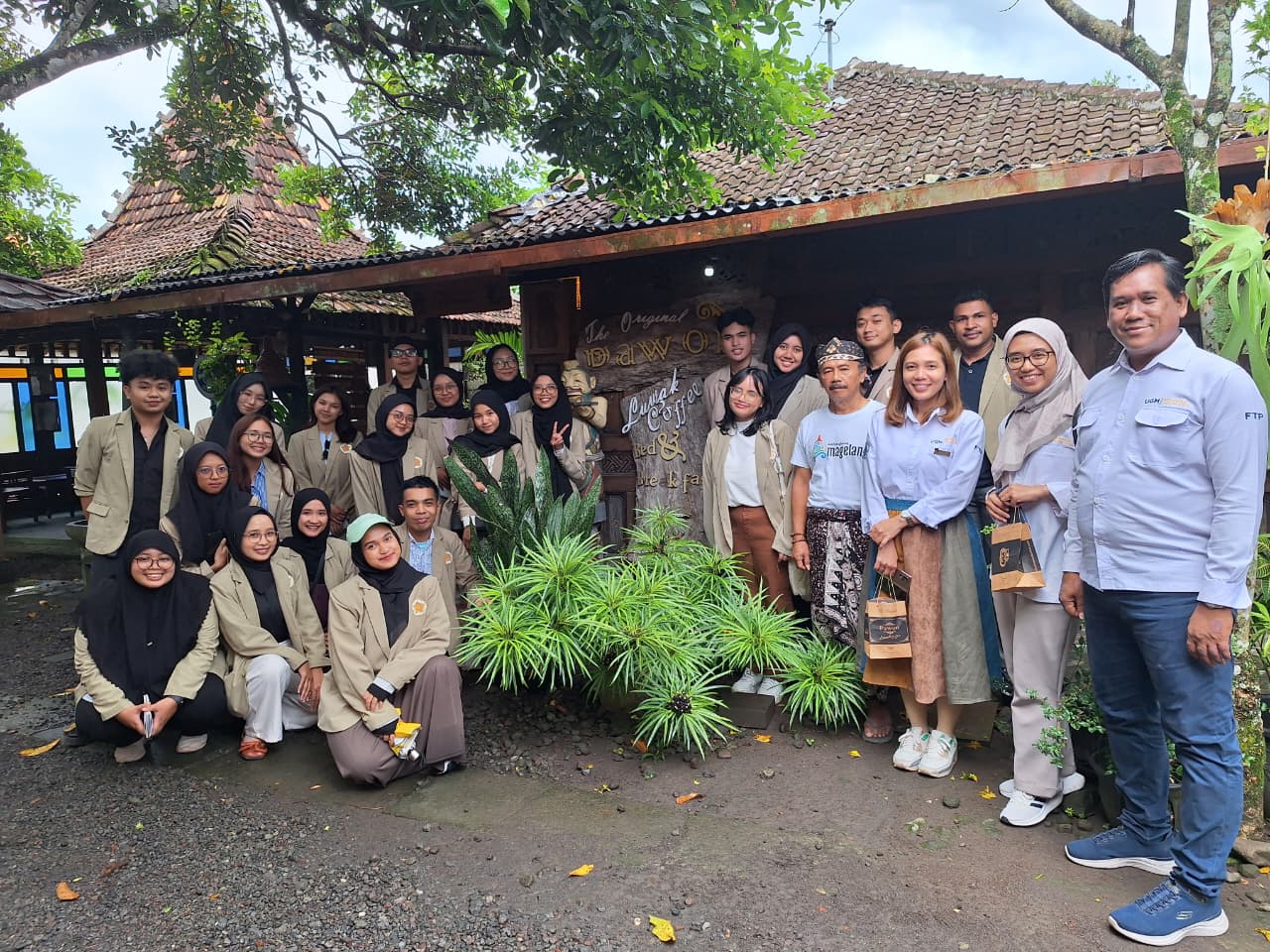
The visit continued at Pawon Luwak Coffee in Magelang, where students were introduced to the production of civet coffee (kopi luwak). They observed civets firsthand and engaged in a hands-on demonstration using a conventional coffee parchment removal tool. Students also sampled Arabica and Robusta civet coffee, allowing them to compare the distinct flavor profiles produced by each variety.
As part of the case-based learning component, students were tasked with analyzing both industrial sites. They identified potential challenges and limitations, explored opportunities for innovation and research, and developed recommendations for improvement in each setting. This exercise encouraged students to move beyond observation and engage critically with real-world industry practices.
Through this industrial visit, students are expected to develop a more comprehensive understanding of the coffee processing chain, from raw materials to finished products. The activity also serves as a bridge between classroom theory and industry practice, while broadening students’ perspectives on the development potential of plantation-based products, particularly coffee, in Indonesia.
Author: Firstnandita Keisha


