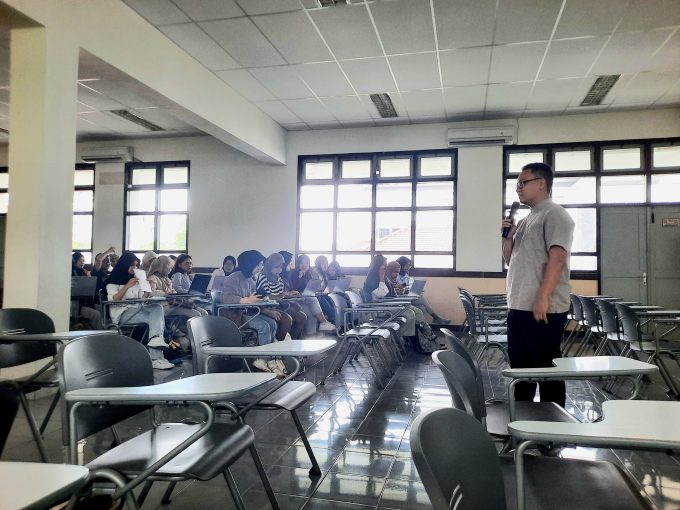
On October 28 and 30, 2024, the Department of Food and Agricultural Product Technology (TPHP) at Universitas Gadjah Mada held a two-day guest lecture series exclusively for students enrolled in the Coffee, Tea, and Cocoa Technology course. The sessions featured Noor Ariefandie Febrianto, M.Sc., Ph.D., a postharvest researcher from the Indonesian Coffee and Cocoa Research Institute (Puslitkoka), who delivered two insightful lectures on cocoa: “Cocoa Quality: Its Relevance to Genetics, Environment, and Postharvest Technology” and “Understanding Production Processes and Quality Control in Cocoa-Based Products.”
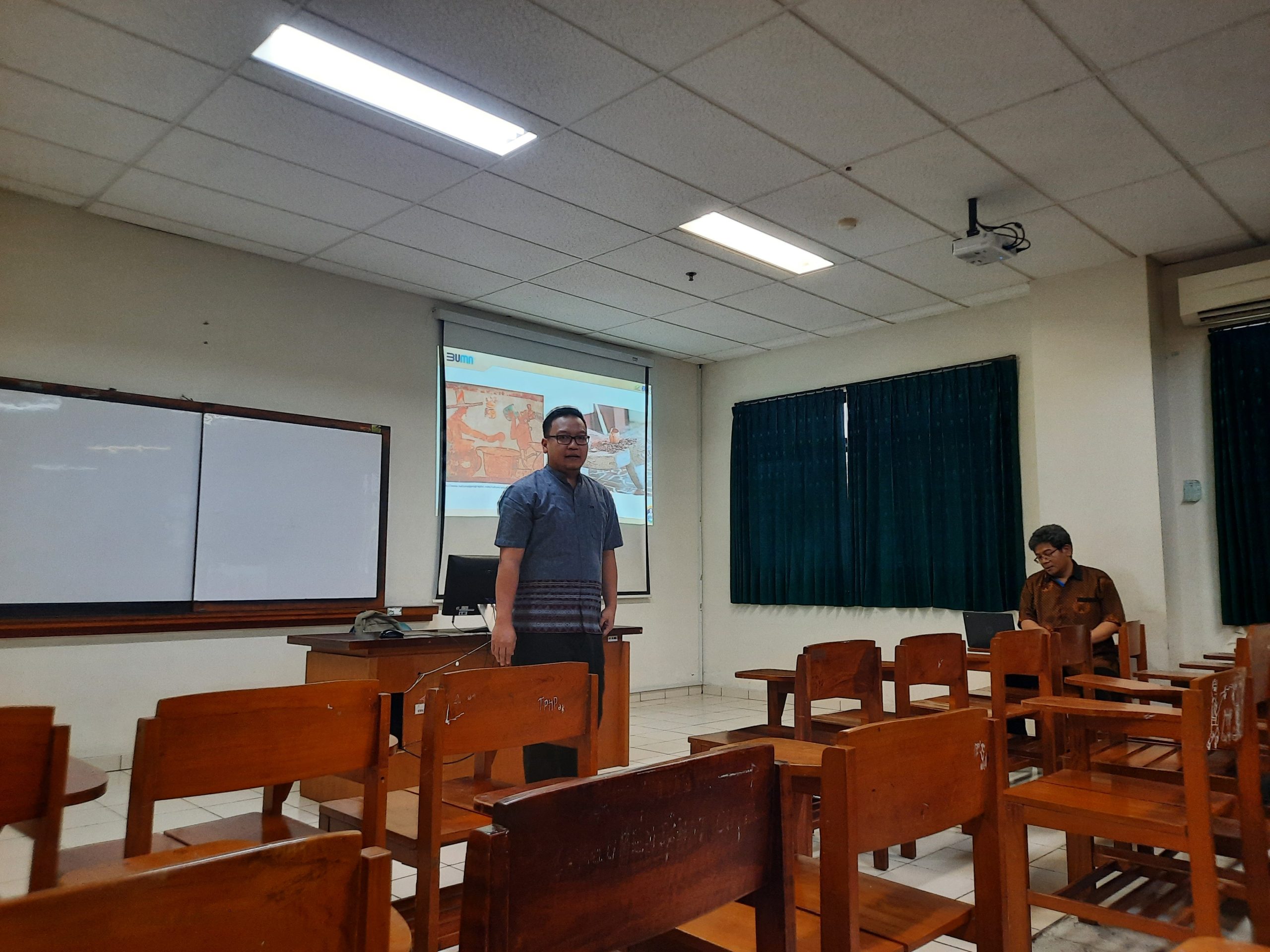 The first session began with a historical overview of cocoa cultivation in Indonesia, which was introduced in Java in 1880 and has since expanded across the archipelago. Today, Indonesia ranks as the world’s third-largest cocoa producer—following Côte d’Ivoire and Ghana—with an annual output of 667,000 tons in 2022. Despite this achievement, Dr. Ariefandie highlighted that the average productivity of 463 kg/ha and a market price of IDR 100,000/kg are still insufficient to meet the economic needs of smallholder farmers. He emphasized that improving cocoa quality is key to enhancing both productivity and farmer income.
Dr. Ariefandie outlined three core factors that influence cocoa bean quality: genetic variety, environmental conditions, and postharvest handling. Indonesia cultivates three main cocoa varieties—Forastero, Criollo, and Trinitario—with Trinitario being the most desirable due to its resistance to disease and superior flavour profile. He noted that harvesting should be conducted when the pods are fully ripe, using techniques that preserve the integrity of the plant’s flower cushion. He further explained how environmental factors such as climate and microbial diversity significantly influence fermentation outcomes and, consequently, bean quality.
In the second session, Dr. Ariefandie delved into downstream processing and quality control for cocoa products. He outlined the postharvest stages that follow harvesting, including sorting, pod storage, pod breaking, bean selection, fermentation, drying, and final grading. The lecture also covered the production of cocoa powder, highlighting steps such as sterilization, roasting, cracking and winnowing, grinding, fat separation, refining, and conching—a critical process in which sugar, cocoa solids, and milk solids are finely dispersed into cocoa and milk fats to form a smooth mixture.
Dr. Ariefandie concluded by discussing the Indonesian National Standard (SNI) for cocoa powder, emphasizing quality benchmarks essential for both domestic and international markets. Throughout both sessions, he actively engaged with students, sharing not only technical knowledge but also practical challenges faced by farmers and researchers at Puslitkoka.
The guest lectures were met with enthusiasm and curiosity, with students participating in dynamic discussions. By connecting classroom learning with real-world practices, the sessions provided students with a comprehensive view of cocoa production, quality control, and industry challenges.
In addition to expanding academic perspectives, this guest lecture series also supported the broader goals of the United Nations Sustainable Development Goals (SDGs). Discussions on increasing cocoa productivity and farmer income are aligned with SDG 2 (Zero Hunger) and SDG 8 (Decent Work and Economic Growth). The emphasis on research and innovation in cocoa processing supports SDG 9 (Industry, Innovation, and Infrastructure). In contrast, quality control strategies aimed at reducing waste in cocoa processing contribute to SDG 12 (Responsible Consumption and Production).
Written by: Anisa Quentina