
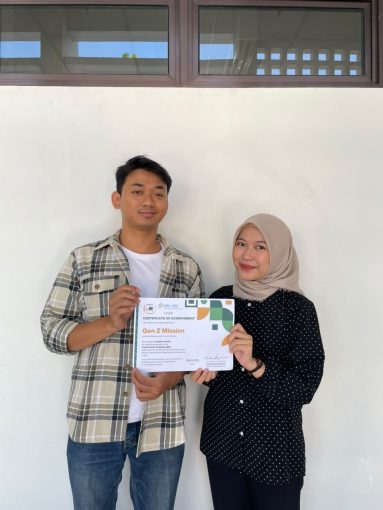
Two students from the Master’s Program in Food Science and Technology at Universitas Gadjah Mada (S2 ITP UGM), Zulkhy Eryanza and Nur Afni Rezkika, received the SHARP Award for “Best Execution” at the 2026 Youth Content Challenge. They earned the award through an educational video that helps consumers understand food labels and sugar-related claims on packaged beverages. The regional competition was part of the #RisewithSHAPEAsia campaign, which carried the theme “Advocating Responsible Food Marketing in Asia.”
The award recognized their ability to clearly explain claims commonly found on food and beverage products, including sugar-free, zero sugar, low sugar, and less sugar. Through the video, Zulkhy and Rezkika encouraged consumers to understand the differences between these claims so they can make more informed choices when purchasing food products.
“We chose this issue because many people still do not understand the differences between claims such as low sugar, less sugar, zero sugar, and sugar-free on food products. We hope consumers will become more critical when reading product labels and be better able to choose healthier options,” Zulkhy said.
Rezkika added that transparent food labeling has become increasingly important amid the high consumption of sugar-sweetened beverages and the widespread use of front-of-pack marketing claims that may mislead consumers. “We hope this achievement can serve as a starting point for expanding campaigns and raising awareness about the importance of transparent food labeling among both consumers and policymakers. Consumers should not rely solely on claims displayed on the front of the package. They should also make a habit of reading nutrition labels and examining sugar, salt, and fat content more critically to protect their own and their families’ long-term health,” Rezkika said.
In addition to discussing sugar-related claims, the video introduced the Nutri-Level labeling system launched by the Indonesian Ministry of Health. Using categories from A to D, the system helps consumers more easily identify the levels of sugar, salt, and fat in food products.
The video concluded with a call for greater transparency in food labeling across Asia. The message reflects the mission of the Youth Content Challenge, which encourages young people to help create a more responsible food marketing environment through creative communication and evidence-based education.
The 2026 Youth Content Challenge was organized through a regional network of participating countries under the SHAPE Asia campaign. Supported by Canada’s International Development Research Centre (IDRC), the program provides a platform for young people to share ideas and advocate for healthier food marketing policies and practices across Asia.
The achievement of Zulkhy Eryanza and Nur Afni Rezkika highlights the contribution of S2 ITP UGM students in communicating food science to the wider public. Through concise and accessible content, they helped strengthen food label literacy and encouraged consumers to make more careful and informed dietary choices.
Author: Firstnandita Keisha


