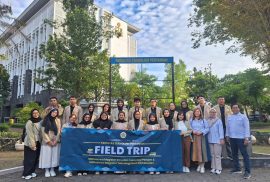
Yogyakarta — The Department of Food and Agricultural Product Technology (TPHP), Universitas Gadjah Mada, once again convened a distinguished guest lecture as part of its Product and Process Development course on Wednesday, April 1, 2026. The session featured Wednes Aria Yuda, S.T.P., M.Sc., Chocolate Technology Officer at PT nDalem Value Creation Indonesia, who delivered a lecture entitled “Innovation to Market in Food Technology.”
In his lecture, Yuda invited students to critically examine a recurring paradox in food innovation: many promising products fail not due to a lack of creativity, but because innovators overlook the broader system in which these products must operate. He outlined several persistent challenges in the field, including high product failure rates, the phenomenon of innovations stalling at the laboratory stage without reaching commercialization—commonly referred to as the “lab trap”—and the inherent complexity of multi-stakeholder food systems.
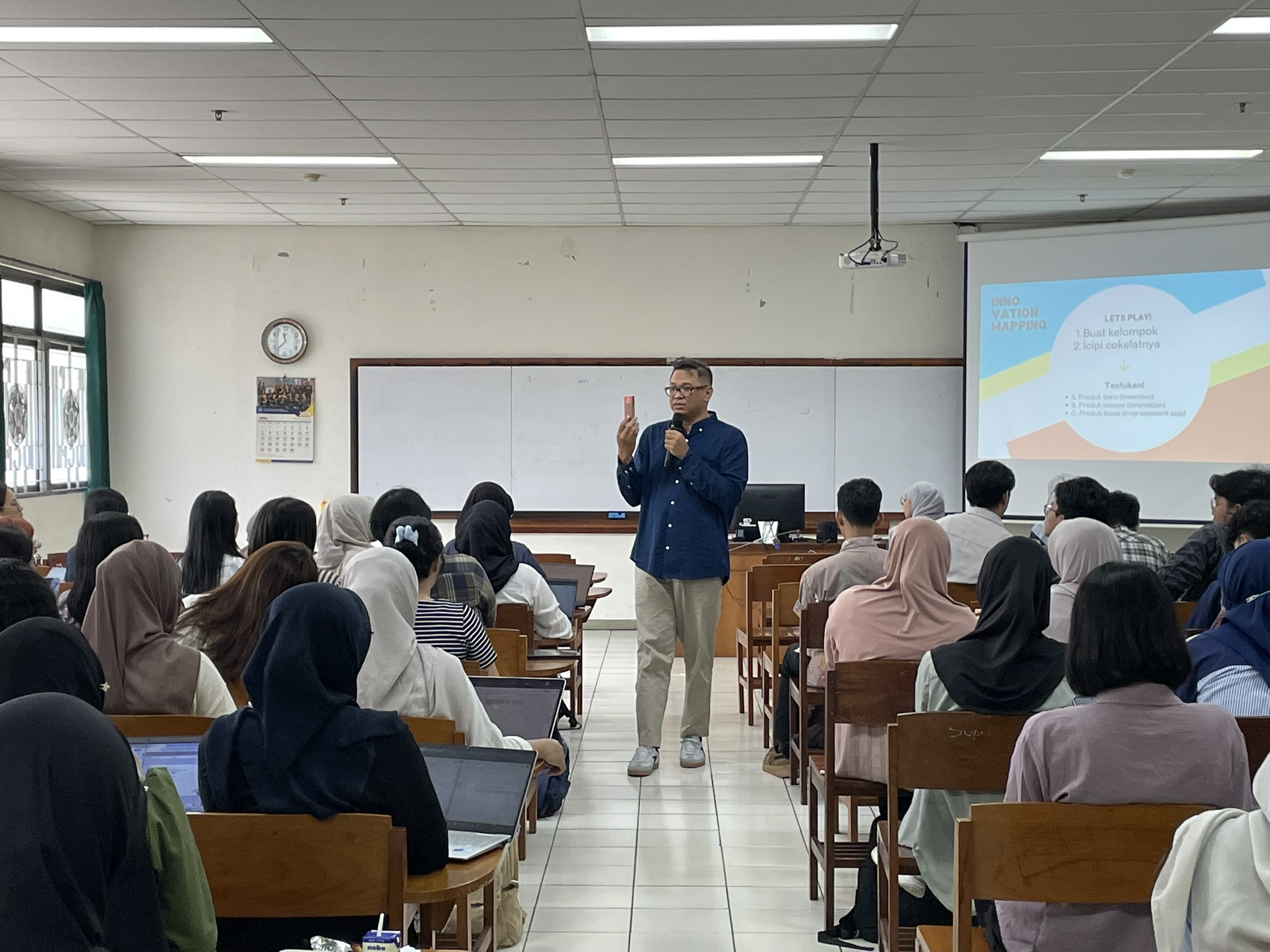 A central theme of the lecture was the distinction between invention and innovation. Yuda defined invention as the act of creating something novel, whereas innovation, in its truest sense, refers to novelty that is successfully adopted and utilized within the market. This distinction encouraged students to reconsider product development not merely as an ideation process, but as an endeavor that must ultimately generate tangible value and real-world impact.
To foster a more applied understanding, students participated in a group-based exercise while sampling chocolate products provided by the speaker. They were tasked with identifying elements of invention, innovation, and incremental improvement within the products. This experiential approach cultivated a more interactive and context-rich learning environment.
Yuda further emphasized that food product development extends far beyond considerations of taste and flavor. It is deeply intertwined with supply chain management, consumer behavior, and economic viability. As such, aspiring food technologists must develop a holistic understanding of how industry ecosystems function.
The session also introduced students to the Design Thinking Framework, encompassing the stages of Empathize, Define, Ideate, Prototype, and Test. Notably, Yuda underscored that empathy within food systems should not be limited to end consumers, but must also extend to farmers and producers, who constitute critical actors within the food value chain.
In closing, Yuda presented several innovation examples from Cokelat nDalem, including Chocolate with Spices, Chocolate Experience, and Storytelling Origin. These cases illustrated that food innovation is not solely about product creation, but also about constructing value, experience, and narrative around the product.
Through this guest lecture, students gained a deeper appreciation that successful innovation must be grounded in real-world problems, supported by robust supply chains, and responsive to market complexity. The event also reflects TPHP’s broader educational commitment to advancing the Sustainable Development Goals (SDGs), particularly SDG 9 (Industry, Innovation and Infrastructure) through industry-relevant innovation, SDG 12 (Responsible Consumption and Production) through fostering sustainable food systems understanding, and SDG 8 (Decent Work and Economic Growth) by equipping students with competencies aligned with professional and market demands.
Writer: Firstnandita Keisha