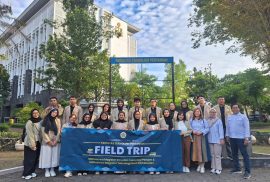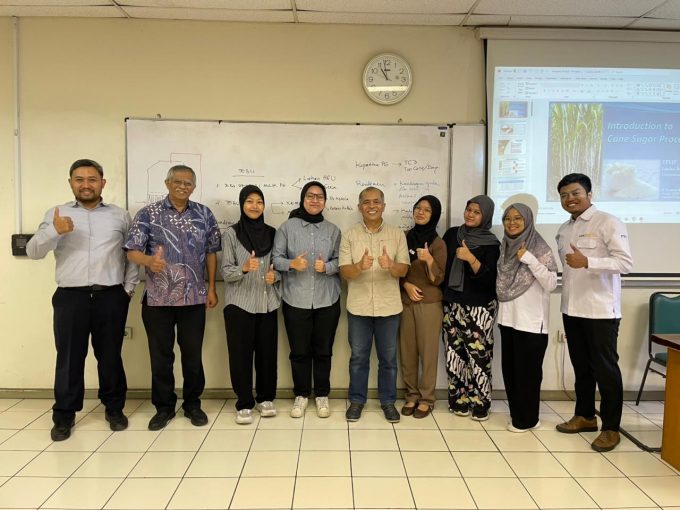
As the food industry continues to evolve rapidly, it is increasingly important for students not only to master theoretical knowledge in the classroom, but also to gain direct exposure to the practices and challenges of the professional world. In response to this need, the Department of Food and Agricultural Product Technology (TPHP), Faculty of Agricultural Technology, Universitas Gadjah Mada, held a guest lecture on Sugar Cane Processing Technology on Monday, April 20, 2024, in Room 512, FTP UGM.
The session featured Ir. Tamino, M.Sc. as guest speaker. The lecture was mandatory for students enrolled in the Sugar Cane Processing Technology course and was also open to all TPHP UGM students interested in expanding their understanding of the sugar cane industry.
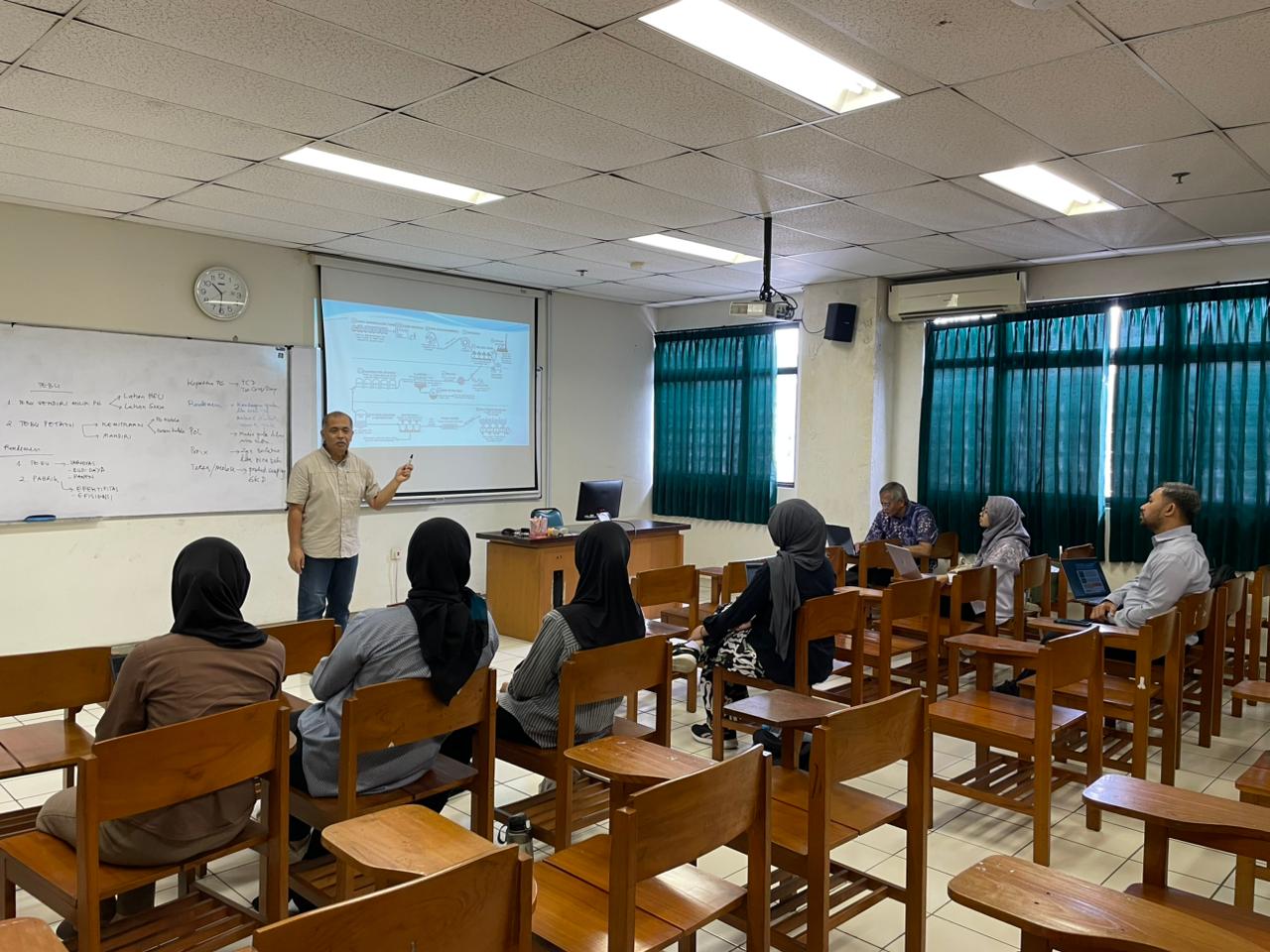
During the lecture, Ir. Tamino encouraged students to view sugar not only from a scientific perspective, but also through the lens of industrial practice. He explained that sugar belongs to the carbohydrate group, characterized by its sweet taste and high solubility in water, with sucrose being the form most widely recognized in the food industry. He also introduced students to a range of alternative sugar sources with development potential, including corn, coconut, nipa palm, palm sugar, and stevia, which has gained growing attention as a low-calorie sweetener.
The discussion then moved beyond basic concepts to the realities of the sugar industry in Indonesia. Ir. Tamino highlighted several strategic issues facing the sector, including price fluctuations, raw material availability, and supply chain challenges that directly affect the sustainability of the national sugar industry. In doing so, the lecture offered students not only conceptual understanding, but also a clearer picture of the broader industrial landscape.
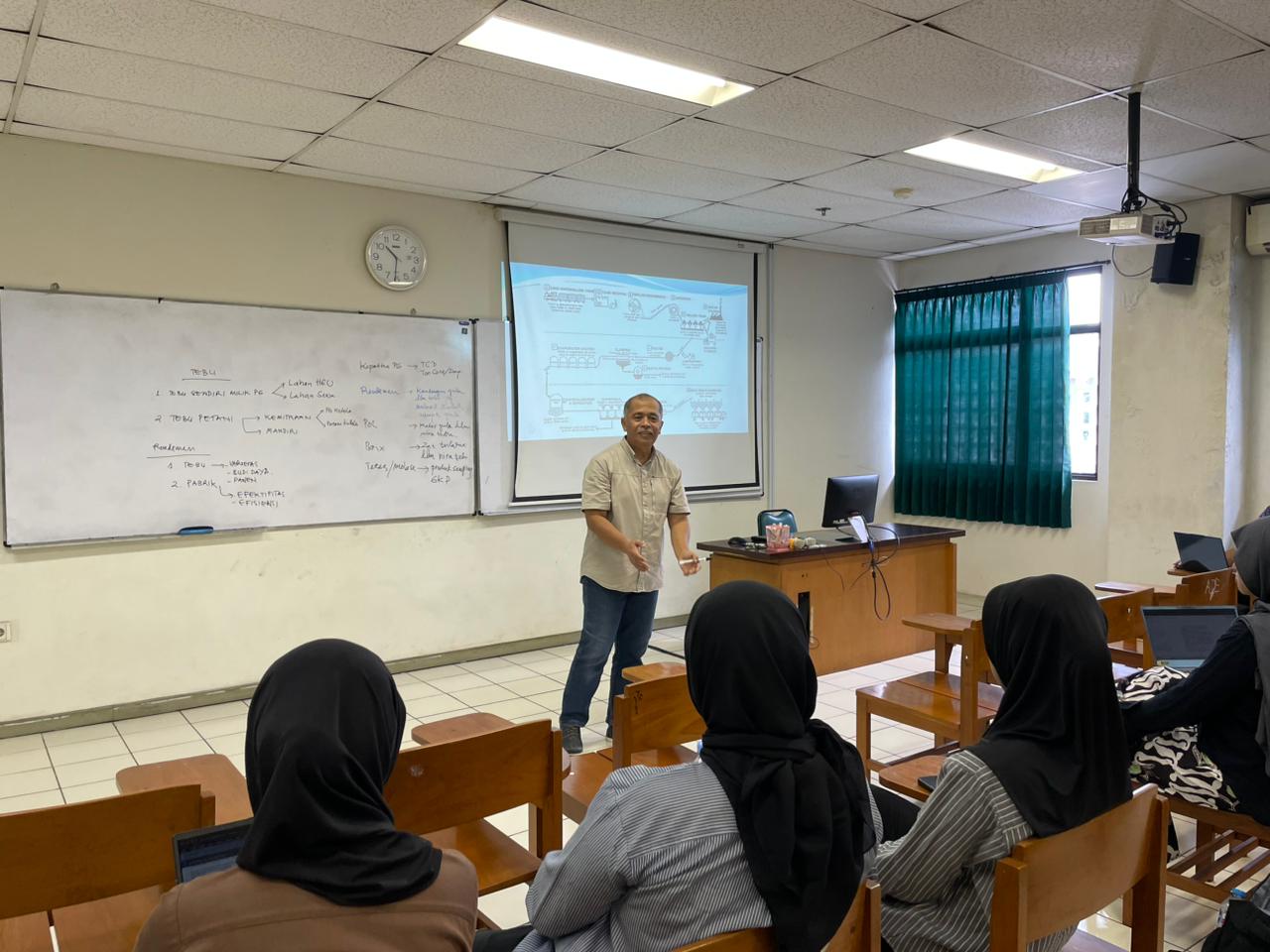 In the main session, Ir. Tamino outlined the sugar production process from sugar cane in a systematic manner, beginning with raw material handling, continuing through juice extraction and processing, and ending with storage of the final product. He explained that sugar cane juice consists primarily of water, accounting for approximately 73–76%, while sucrose content generally ranges from 10–12%. Drawing on his practical field experience, he presented each stage in an applied and accessible way, allowing students to appreciate the complexity and integration involved in industrial sugar production.
Through this guest lecture, the Department of TPHP UGM reaffirmed its commitment to providing learning experiences that remain closely connected to industry needs. The presence of practitioners such as Ir. Tamino brings added value to students’ academic development by bridging classroom learning with the operational realities of the sugar industry.
Writer: Firstnandita Keisha